
Kalyan, Main Bazar, Milan, Rajdhani: the market names on every matka chart today go back to Mumbai in the 1960s. This article covers the history of Matka: where it came from and how its three-digit result format began. It also shows how that format still shapes the charts you read today. However, it is a history and an explainer, not betting advice.
Before Matka: Betting on Cotton Rates
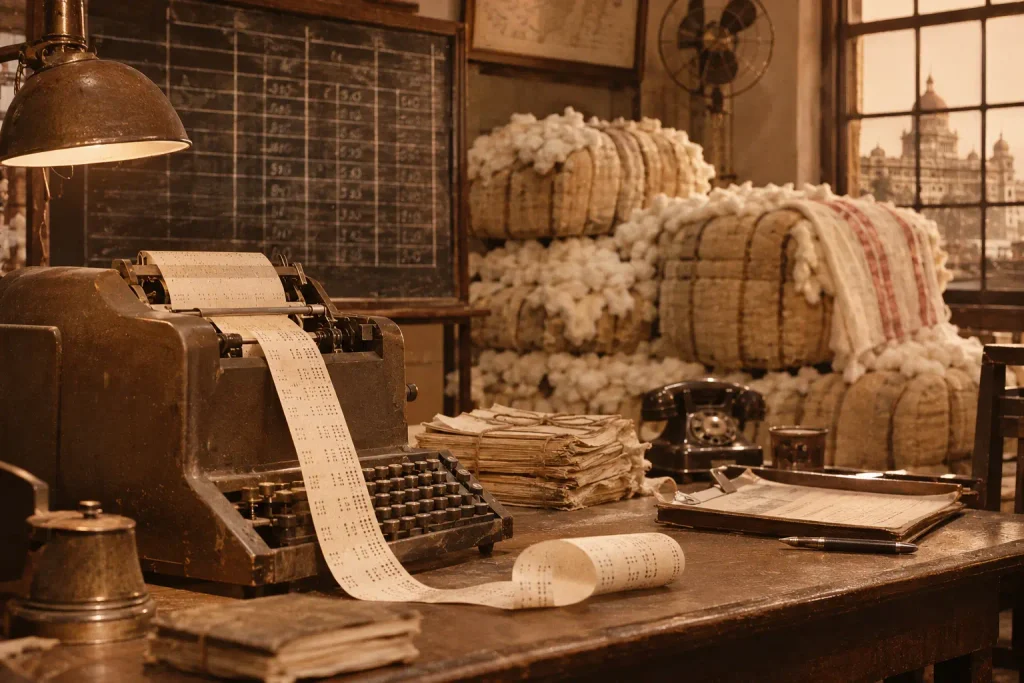
Matka began before the Partition of India, under the name Ankada Jugar, which means “figures gambling”. At first, people did not bet on drawn numbers. Instead, they bet on the opening and closing rates of cotton, which teleprinters carried from the New York Cotton Exchange to the Bombay Cotton Exchange.
However, in 1961 the New York Cotton Exchange stopped this practice. As a result, the players needed a new way to produce random numbers every day.
The Pot That Gave Matka Its Name
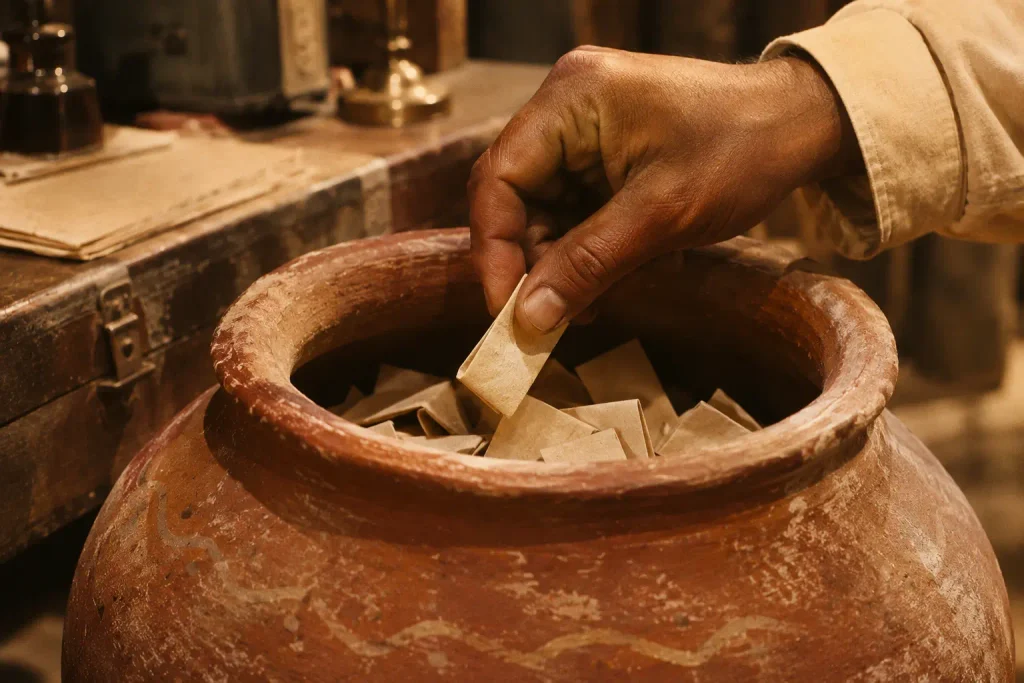
The answer was simple. Organisers wrote numbers on slips of paper and put them into a matka, a large earthen pot. Then they pulled out slips to decide the result. Later, they switched to playing cards instead of paper slips. Still, the name “matka” stayed, and people use it today.
Kalyanji Bhagat and the Kalyan Market
In 1962, Kalyanji Bhagat, who ran a grocery shop in Worli, Mumbai, started what became the Worli Matka. His market also ran every day of the week. After he died in the early 1990s, his son Suresh Bhagat took over the business.
Today’s Kalyan market takes its name from this history. The Sara777 Kalyan chart holds results going back to 31 December 2012. However, unlike Kalyanji’s daily market, it shows results only from Monday to Saturday in the 12 months to October 2026, with Sunday off.
Ratan Khatri and “Main Bazaar”
Ratan Khatri came from a Sindhi family in Karachi, and reports give his birth year as around 1932. After the Partition in 1947, his family moved to Bombay. Then, in the 1960s, he started his own market, remembered as Ratan Matka or Main Bazaar Matka. Many players also considered its rules better than those of the older Worli Matka.
Khatri drew the numbers with playing cards taken from a pot, and he held the draws in public. Because of this, his results had a reputation for being fair. His market ran from Monday to Friday, with an “open” draw at 9 pm and a “close” draw at midnight. Even today, every chart still uses the words open and close.
During the Emergency (1975–1977), Khatri spent 19 months in jail. Later, he retired from the matka business in 1993, and he died at his home in Mumbai on 9 May 2020, aged 88.
Similarly, the Sara777 Main Bazar chart shows the same five-day pattern: in the 12 months to October 2026, it has results from Monday to Friday only. However, Khatri retired in 1993, so other people run the present-day markets that use the name Main Bazar or his name.
How the Old Draw Became Today’s Result Format
Even today, every result follows the way the old draws worked:
- First, three cards give three digits, which together form a three-digit number called the panna.
- Next, you add the three digits, and the last digit of the total is the single result.
- Then the same steps happen a second time, so there is one result at the open and one at the close.
- Finally, the open digit and the close digit together make the two-digit Jodi.
For example, here is the oldest result on the Sara777 Kalyan chart, from 31 December 2012:
| Part | Value | How to work it out |
|---|---|---|
| Open panna | 799 | Three digits at the open |
| Open digit | 5 | 7 + 9 + 9 = 25; the last digit is 5 |
| Close panna | 155 | Three digits at the close |
| Close digit | 1 | 1 + 5 + 5 = 11; the last digit is 1 |
| Jodi | 51 | Open digit followed by close digit |
So the full result line reads 799-51-155. In other words, more than 60 years after the cotton rates stopped, the format is still the same.
Also read: Sara777 Chart & Sara 777 Live Result: how to read Jodi and Pana charts
Peak, Police Crackdown and Decline
Matka reached its peak in the 1980s and 1990s. During that time, reports put monthly bets at more than ₹500 crore. Then a large crackdown by the Mumbai Police pushed the dens out of the city, so many bookies moved to Gujarat, Rajasthan and other states. In 1995, there were more than 2,000 big and medium bookies in and around Mumbai; later, their number fell to fewer than 300.
Matka gambling is illegal in India.
From Paper Slips to Online Charts
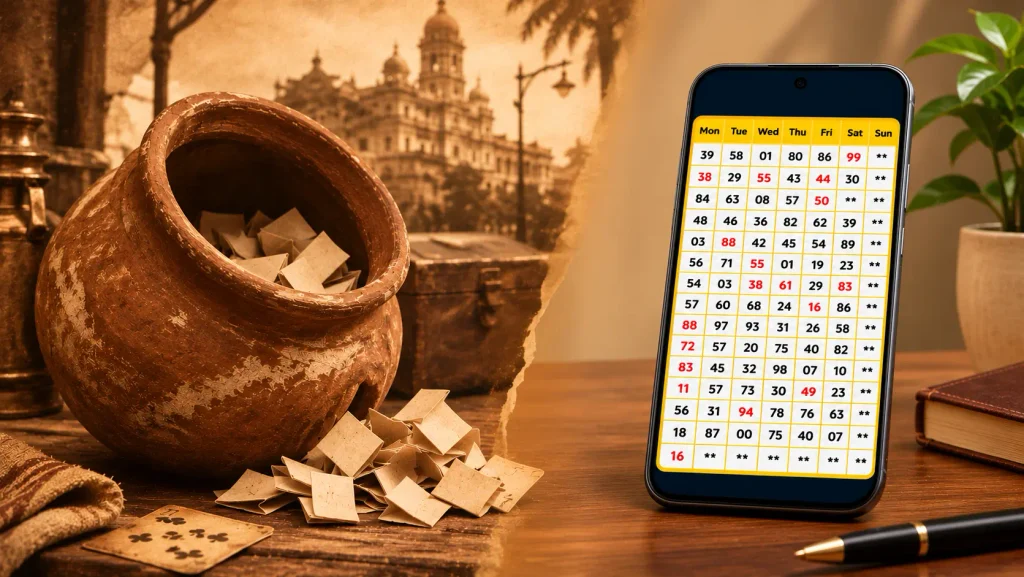
Today, websites publish results online, and charts keep a record of every declared result by date. Also, many markets now exist, from morning to night, each with its own timings and days off.
Meanwhile, the law has changed too. India’s Promotion and Regulation of Online Gaming Act, 2025 bans online money games and their advertising.
In short, the history of Matka shows that a chart is a record of the past. Like the cotton rates and the paper slips before it, each result is a separate draw, so no chart can tell you the next number. Before you trust any matka website or app, read 100% Trusted Matka App: what to check before you decide.
History of Matka: Timeline
| When | What happened |
|---|---|
| Before 1947 | Ankada Jugar: betting on cotton rates sent from New York to Bombay |
| 1961 | The New York Cotton Exchange stops the practice |
| 1962 | Kalyanji Bhagat starts the Worli Matka |
| 1960s | Ratan Khatri starts his own market, remembered as Main Bazaar Matka |
| 1975–1977 | Khatri spends 19 months in jail during the Emergency |
| 1980s–1990s | Matka reaches its peak |
| Early 1990s | Kalyanji Bhagat dies; his son Suresh takes over |
| 1993 | Ratan Khatri retires |
| Mid-1990s onward | Police crackdown; bookies move out of Mumbai |
| 9 May 2020 | Ratan Khatri dies in Mumbai, aged 88 |
| 2025 | India passes the Promotion and Regulation of Online Gaming Act |
FAQs
Why is it called Matka?
“Matka” means an earthen pot. In the 1960s, organisers wrote numbers on slips of paper and drew them from such a pot. Later, playing cards replaced the slips, but the name stayed.
Who started Matka?
Betting on cotton rates existed before 1947. Later, two men shaped the drawn-number Matka: Kalyanji Bhagat, who started the Worli Matka in 1962, and Ratan Khatri, who started his own market in the 1960s.
Is today’s Main Bazar market Ratan Khatri’s market?
The name comes from his market. However, Khatri retired in 1993 and died in 2020, so other people run the present-day markets that use the name.
Can the history of a chart predict the next result?
No. Every result is a separate draw, so a chart only shows results that markets have already declared.
Sources
History: Wikipedia, Matka gambling and Ratan Khatri; Free Press Journal (PTI), Mumbai: ‘Matka King’ Ratan Khatri dead. Also, the chart examples and weekday patterns come from the Sara777 Kalyan and Main Bazar charts, checked on 3 November 2026.
Finally, please play responsibly and follow the law where you live. For more help, read our Responsible Gaming page.